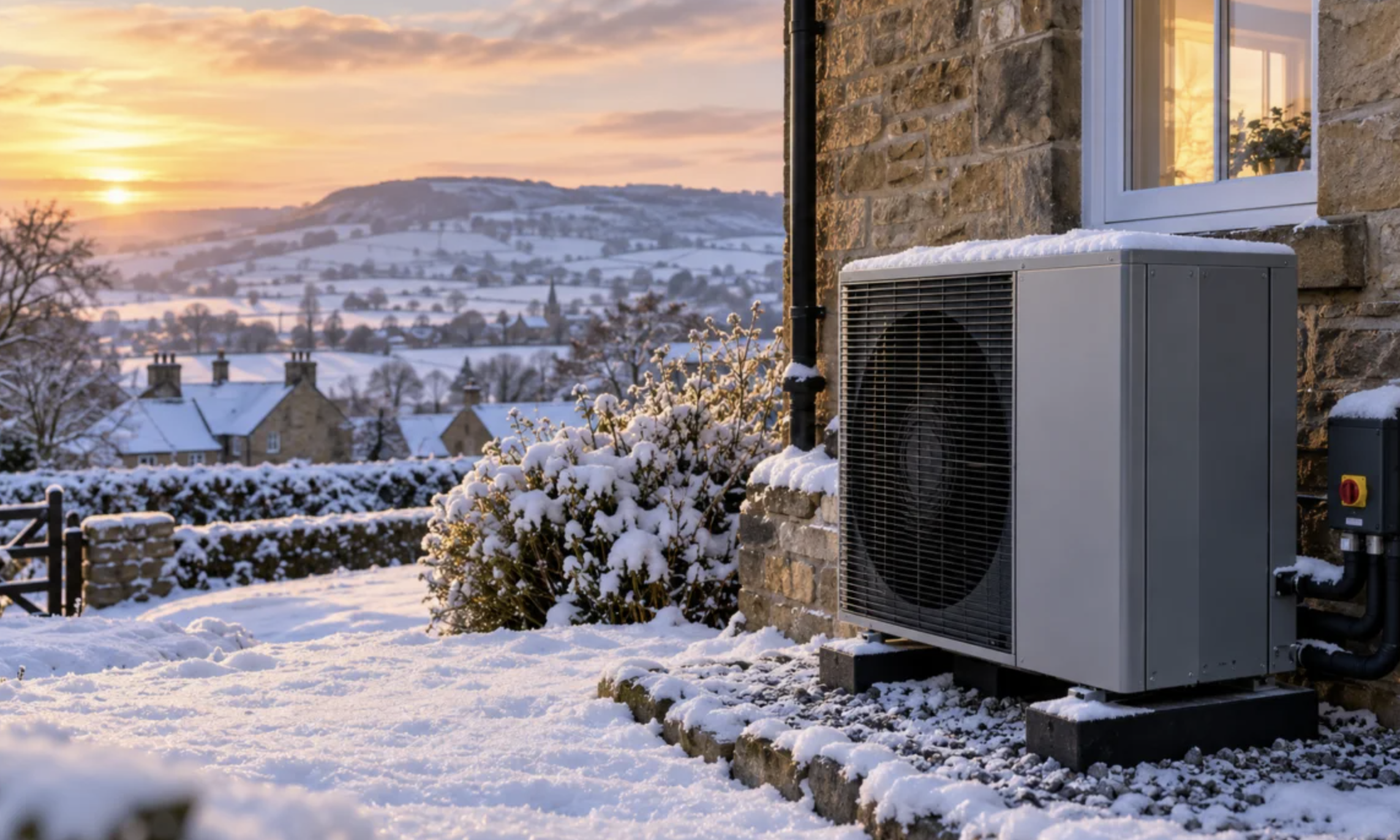
When winter arrives in the North East, we’re no strangers to freezing temperatures, frosty mornings and the occasional icy spell. But if you have an air source heat pump, you might find yourself taking a closer look at the outdoor unit when the temperature drops.
Is that layer of frost normal? Should you be worried if you see steam coming from your heat pump? And what should you do if the unit looks covered in ice?
The good news is that air source heat pumps are designed to operate outdoors all year round, including in freezing conditions. Here’s what you need to know when the winter weather sets in.
Can a heat pump work in freezing temperatures?
Yes! Air source heat pumps are designed to extract heat energy from the outside air, even when temperatures fall below zero.
Although it might feel freezing outside, there is still heat energy in the air that the heat pump can use to warm your home and hot water.
As temperatures drop, your heat pump may need to work harder, and its efficiency can decrease. The exact temperatures it can operate in depend on the model, so it’s always worth checking your manufacturer’s guidance.
A cold spell doesn’t automatically mean your heat pump will stop working. In fact, it’s normal for a properly operating system to continue heating your home throughout winter.
Why does frost build up on a heat pump?
If you’ve looked at your outdoor unit on a cold morning and noticed frost around the coil, don’t panic. This is often a normal part of how an air source heat pump works.
As your heat pump extracts heat from the outdoor air, the coil inside the unit becomes cold. When moisture in the air comes into contact with the coil, it can freeze and form a layer of frost.
This can happen even when the outdoor temperature is a few degrees above zero, particularly when the weather is cold and damp.
A build-up of frost can restrict airflow through the unit, so your heat pump has a clever way of dealing with it: an automatic defrost cycle.
What is a heat pump defrost cycle?
Your heat pump is designed to manage normal frost build-up itself.
When the system detects that the outdoor coil needs defrosting, it temporarily changes how it operates to warm the coil and melt the ice. Once the process is complete, it returns to normal heating.
During this cycle, you might notice a few things:
- Steam rising from the unit: This can happen as the frost melts and is usually nothing to worry about.
- Water dripping underneath: This is often simply melted frost draining away from the unit.
- A temporary change in operation: Your heat pump may briefly pause its usual heating process while it defrosts.
These are all common signs of a defrost cycle. You don’t need to intervene when the system is carrying this out normally.
What if my heat pump is covered in ice?
There’s a difference between a light layer of frost and a build-up of heavy ice that doesn’t seem to clear.
While some frost is expected in cold weather, persistent or excessive icing can indicate that something isn’t working as it should.
It’s worth contacting a qualified heat pump engineer if you notice:
- Thick ice that continues to build up rather than clearing.
- Ice obstructing the fan or restricting airflow.
- Your heat pump repeatedly struggling to defrost.
- Your home becoming unusually cold or your heating not working properly.
- An error code appearing on the unit.
These symptoms don’t necessarily mean there’s a major fault, but they are worth investigating rather than leaving the system to struggle.
Important tip: Never try to chip ice away from the unit or force the fan to move. You could damage components. Let the heat pump manage its normal defrost cycle, and contact an engineer if the ice isn’t clearing properly.
Should I cover my heat pump during winter?
It might seem like a good idea to protect your heat pump from snow and ice, but most outdoor units are designed to withstand normal winter weather without needing to be covered.
In fact, placing a cover over the unit while it’s operating can restrict airflow and interfere with its performance.
Instead, keep an eye on the area around your heat pump:
- Clear away leaves and debris that could obstruct airflow.
- Make sure snow isn’t blocking the air intake or outlet.
- Keep the area around the unit clear so air can circulate freely.
- Check that water from the defrost cycle can drain away.
If you notice persistent water or ice collecting around the base, particularly if drainage appears restricted, it’s worth getting advice from an engineer.
Does freezing weather affect how well my heat pump works?
Like any heating system, your heat pump has to work harder when outdoor temperatures fall and your home loses heat more quickly.
You may notice longer running times, increased electricity use or more frequent defrost cycles during particularly cold and damp weather.
This doesn’t automatically mean there’s a fault. However, if your heat pump is struggling to keep your home warm, making unusual noises or showing signs of excessive ice build-up, it’s worth getting it checked.
Regular professional servicing can also help identify potential issues before the coldest weather arrives, giving you greater peace of mind when you need your heating most.
Need your heat pump serviced?
Choose a one-off heat pump service or join our Annual Heat Pump Service Plan and we’ll take care of it each year.